Heavy industry runs on heat. Steel, chemicals, refining and paper all need steam or hot gas around the clock, and most of it still comes from burning fossil fuels. That is why nuclear process heat is back on the table. A reactor can supply steady heat and power for decades, so a growing number of plant owners now ask a hard question: could it work at our site?
The answer depends on the plant. It depends on how hot the process runs, how much steam it needs, where the site sits and who would build and run the reactor. This post explains where nuclear heat fits today, what changed this month and what a sound assessment should cover before anyone commits money.
Why heat is the hard part of industrial decarbonization
Electricity gets most of the attention. However, heat is the bigger problem for industry. A U.S. Department of Energy analysis found that nearly 60 percent of industrial emissions come from heat and on-site power.
Swapping that heat is not simple. Many processes need high temperatures without a break. Wind and solar alone do not deliver that. As a result, plant owners are looking at a short list of firm, low-carbon options. Nuclear process heat is one of them.
Where nuclear process heat fits by temperature
Temperature decides almost everything. For example, today’s light-water reactors run at about 300°C. That suits low-grade heat such as drying, food processing and some paper and chemical steps.
Advanced reactors run hotter. High-temperature gas reactors reach about 750°C, so they can serve far more of the chemical and refining sector. Some designs aim higher still. One policy group puts nuclear among the few options that can meet process heat needs up to 950°C.
Above that range, the fit gets harder. Steelmaking and cement need even more heat at certain steps. In those cases, nuclear may supply power, hydrogen or part of the heat rather than all of it.
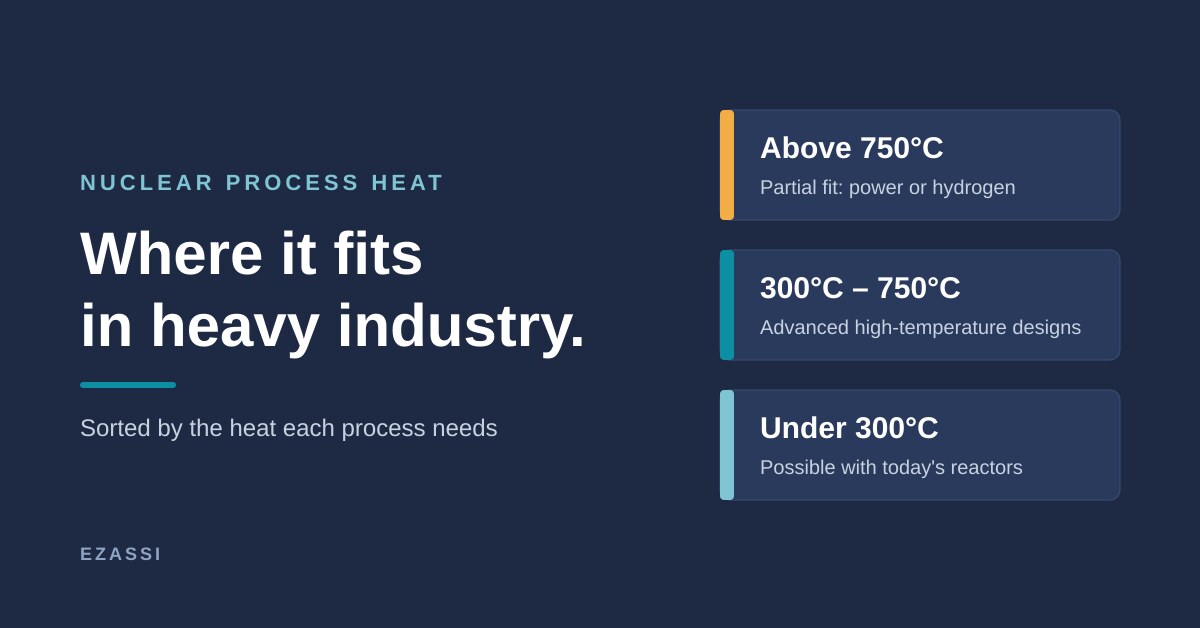
In short, a good first screen sorts each process by the heat it needs:
- Low-grade heat, under 300°C: possible today with existing reactor types
- Medium heat, 300°C to 750°C: the target market for advanced high-temperature designs
- High heat, above 750°C: a partial fit, often through power or hydrogen
A real test case: nuclear at a chemical plant
This month brought a clear signal. The Nuclear Regulatory Commission issued a construction permit for a four-reactor plant at a Dow chemical site in Seadrift, Texas. It is the first construction permit for a nuclear reactor on an industrial site in the United States.
The plan uses four small modular reactors. Each one is designed to make 80 megawatts of power or 200 megawatts of heat. Together, they could supply up to 320 megawatts of power and support the site’s steam needs for 60 years.
Still, a permit is not a final decision. Both companies say they have not yet decided to build. That gap matters. It shows that the technical case is only one part of the work. Cost, timing, partners and risk still have to line up.
How to assess nuclear process heat for your sites
Most companies are not ready to file for a permit, and nuclear process heat may only suit some of their sites. Instead, they need to know where to look first. A sound assessment answers six questions.
1. Which processes need what heat? First, map each process by temperature, steam pressure and hours of use. This shows which loads a reactor could serve and which it could not.
2. Steam, power or both? Next, decide what the reactor would supply. Some sites need steam most. Others need power, or hydrogen made on site.
3. Which sites fit? Then look at land, water, grid ties and the plants nearby. A site with old boilers near the end of their life is often a stronger fit.
4. What do the rules require? Rules shape the timeline. Track licensing steps, state policy and local review for each site.
5. What will it cost, and when? First-of-a-kind plants carry high costs and long lead times. So compare those against gas prices, carbon policy and any public funding.
6. Who are the right partners? Finally, identify the reactor developers, utilities and fuel suppliers that fit your needs. Their designs, track records and funding vary a lot.
How Ezassi supports nuclear process heat research
Ezassi analysts recently completed a series of research reports on nuclear energy for industry, for a client in the energy sector. Work like this gives a team a clear view of where the technology stands and which questions to answer next.
Ezassi Research Services starts with your goal, not a template. Our analysts design the work around your sites and your decision. Then they deliver findings you can act on, along with the sources behind them.
Rules and permits change fast in this field. Ezassi tracks regulations as signals, so your team sees a new filing or rule change when it happens.
What to do next
Nuclear process heat will not suit every plant. Even so, the first permit at an industrial site shows the option is real. The companies that do the homework now will know where they stand when costs fall and more designs reach the market.
Book a meeting to talk through your sites and your heat needs.